
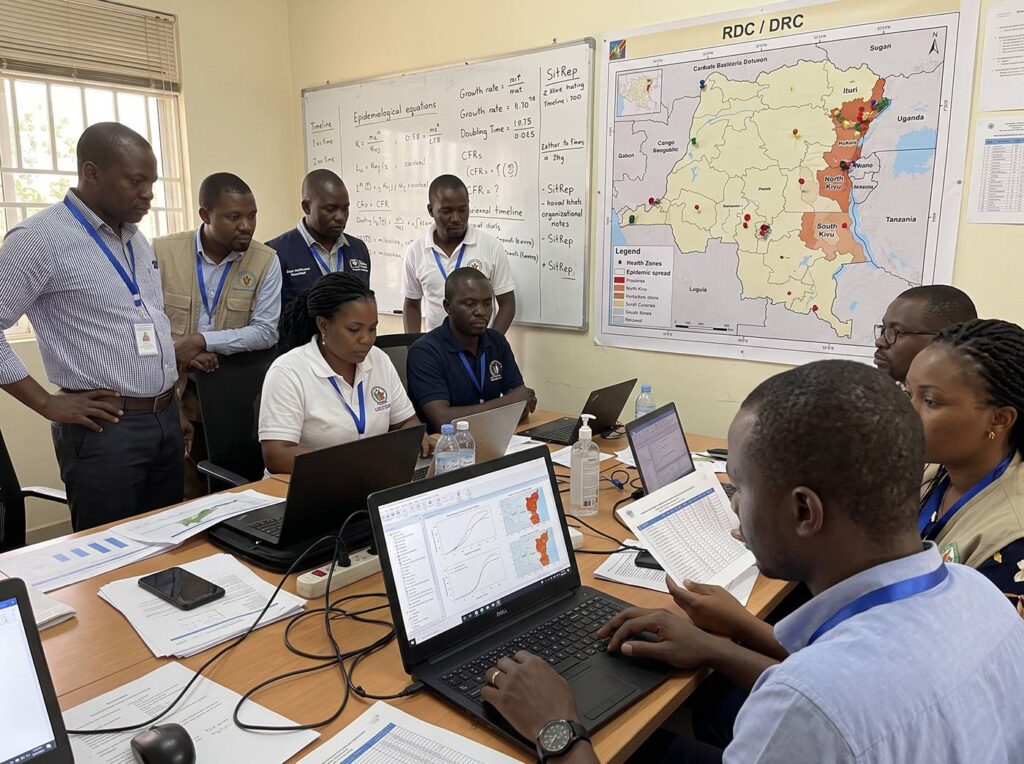
Rapid Geographic Expansion, Decelerating Growth, and Six-Month Scenario Projections of Bundibugyo Virus Disease in the DRC
In May 2026, the Democratic Republic of the Congo declared an outbreak of Bundibugyo virus disease caused by Bundibugyo ebolavirus. We analysed aggregated official Situation Reports (SitReps) issued from 14 May through 14 July 2026 to describe the reported epi- demic trajectory, geographic expansion, mortality, interval-specific growth, and conditional six-month
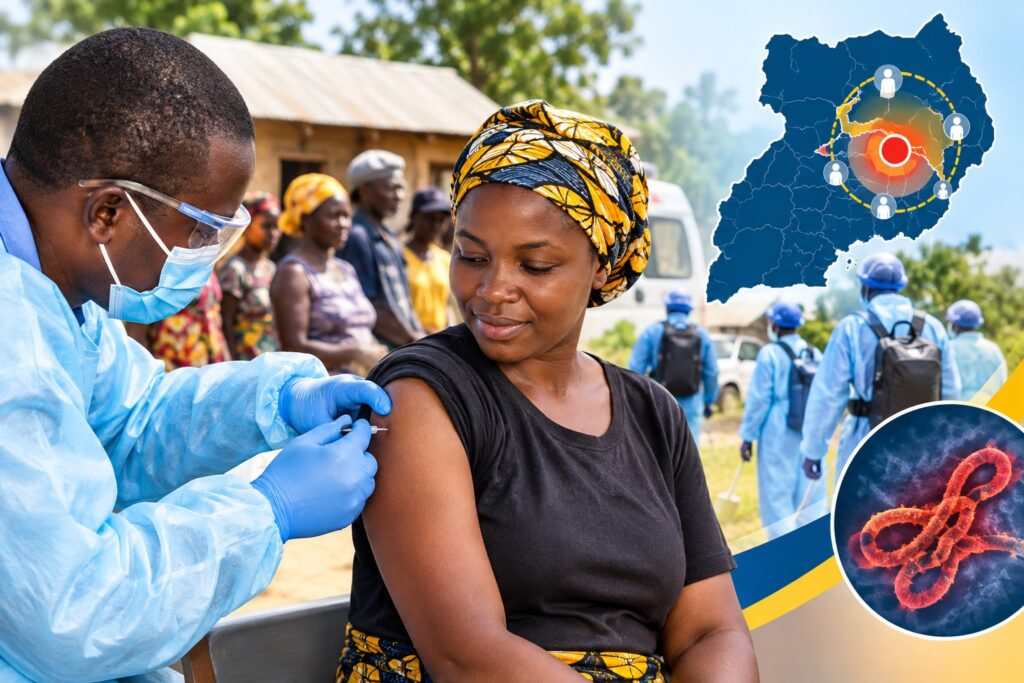
Implementing an intra outbreak ring vaccination clinical trial for Sudan Ebola virus disease within four days of outbreak notification in Uganda
East and Central Africa experiences heightened threats for Ebola Virus Disease (EVD), with the latest outbreak caused by the Bundibugyo ebolavirus (BDBV) reported in the Democratic Republic of the Congo (DRC) and Uganda on 15th May 2026. The BDBV outbreak comes just over a year following the declaration of Sudan

Interdiscplinary Consortium For Epidemics Research And Response (ICER) Position Statement
Call for action for neighbouring countries and the African Union to support efforts to contain the Democratic Republic of Congo’s response to the outbreak of Bundibugyo virus disease Background At the peak of the West African outbreak of Ebola virus disease; the African Union mobilized different African countries to support

Sudan Virus Disease in Uganda, 2025
In early 2025, Uganda faced its fifth outbreak of Sudan virus disease. What followed was a response notable not only for how quickly the virus was contained, but for the unusually low death toll it produced — an outcome that offers real insight for how emerging epidemic threats can be

Remdesivir triphosphate as a potential repurposed drug against the emerging Bundibugyo Ebolavirus 2026
When an outbreak of Bundibugyo virus disease erupted across the Democratic Republic of the Congo and Uganda in May 2026, clinicians faced an urgent problem: there were no proven treatments. Two monoclonal antibodies existed for Zaire Ebola, but Bundibugyo virus is a different species—and the evidence from those other Ebolavirus

Genome-wide dynamics of emerging viral diseases
Emerging viral diseases rarely arise from nowhere. Most originate in animal reservoirs—wild or domestic species where the virus persists without causing severe disease. Yet identifying which animal populations might harbour a dangerous pathogen, or which new host a virus might successfully invade, remains extraordinarily difficult. Field-based ecological mapping is expensive,

Cross-Border Transmission of Bundibugyo Virus into Uganda, 2026
In May 2026, two travellers who had fallen ill in the Democratic Republic of the Congo crossed into Uganda seeking advanced medical care — and in doing so, carried Ebola disease caused by Bundibugyo virus into Kampala. It marked Uganda’s second recognised outbreak of this virus since 2007, and prompted

Mpox Epidemics: A Call to Restore Humanity’s Lost Herd Immunity to Orthopoxviruses
Orthopoxviruses are a group of zoonotic, phylogenetically related, double-stranded DNA viruses. The genus Orthopoxvirus belongs to the family Poxviridae, under which there are several genera, including Parapoxvirus, Avipoxvirus, Capripoxvirus, Leporipoxvirus, Suipoxvirus, Molluscipoxvirus, and Yatapoxvirus. Historically, the most widely reported infection caused by an Orthopoxvirus is smallpox—a disease of humans from