ICER dialogue calls for faster, trusted and coordinated action on BDBV
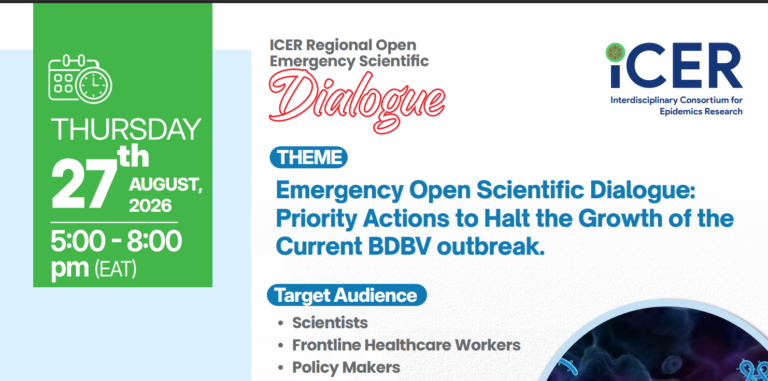
Regional Open Emergency Scientific Dialogue | 27 August 2026 | Virtual event
Event
ICER Regional Open Emergency Scientific Dialogue
Focus
Priority actions to halt growth of the current BDBV outbreak in the DRC
Reach
492 registrations; 225 live participants; at least 23 countries represented
Interdisciplinary Consortium for Epidemics Research and Response (ICER) called for a faster, more coordinated and community-centred response to the Bundibugyo ebolavirus disease (BDBV) outbreak in the Democratic Republic of the Congo (DRC). The call followed ICER’s Regional Open Emergency Scientific Dialogue, held virtually on 27th August 2026.
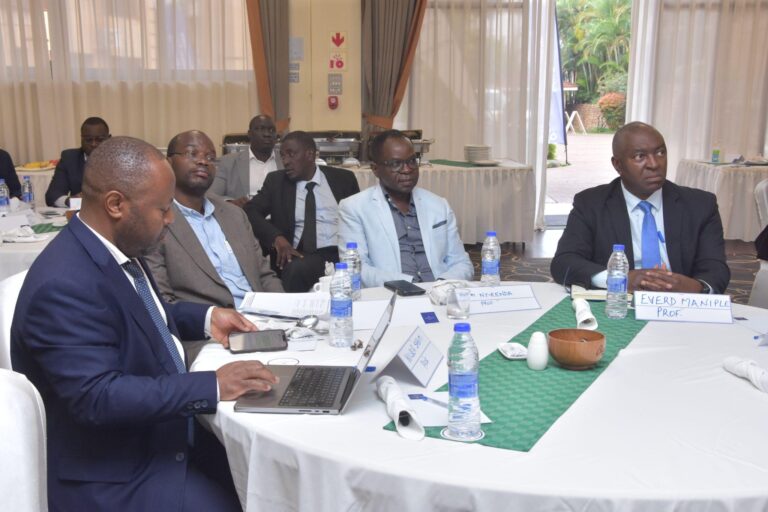
The dialogue brought together public-health leaders, researchers, clinicians, laboratory specialists, social scientists, frontline responders and regional partners. Its regional reach reflected both the significance of the outbreak and the need for practical collaboration across disciplines and borders.
A response measured in hours, not intentions
The strongest message from the meeting was that outbreak control depends on shortening the full pathway from alert to care. Participants emphasised rapid investigation of community alerts, active case finding, complete contact tracing, timely sampling and diagnosis, safe isolation, reliable referral and accessible clinical care. These functions must operate as one connected system, particularly in remote areas and in communities affected by insecurity or frequent movement.
Community trust at the centre
Speakers stressed that community engagement is not an optional add-on. Trust shapes whether people report illness, seek care early, share contact information and accept safe practices. The dialogue recommended working through trusted local structures, including community health workers, religious and cultural leaders, youth networks, transport operators and survivors, and using local languages and two-way feedback mechanisms. Concerns raised by communities should inform incident-management decisions quickly.
Cross-border capability pooling
Participants urged neighbouring countries and regional institutions to move beyond ad hoc coordination. Proposed measures included rapid information-sharing channels, joint preparedness at movement corridors, cross-border training and simulation exercises, shared laboratory and referral arrangements, and a capability-on-call roster of experts in epidemiology, diagnostics, IPC, clinical care, data and logistics. The aim is to retain national ownership while ensuring that critical skills and systems can be activated rapidly where they are needed.
Six immediate priorities
Accelerate the alert-to-care pathway.
Expand community-based surveillance and contact tracing.
Integrate social and behavioural expertise into response teams.
Strengthen diagnostics, referral and linkage to high-quality care.
Institutionalise cross-border collaboration.
Direct resources transparently to frontline bottlenecks.
From recommendations to a roadmap
Participants called for a costed action plan with responsible institutions, timelines and measurable indicators. ICER will use the dialogue outcomes to support continued scientific exchange, policy engagement and regional collaboration. The organisation remains committed to connecting evidence with the operational realities of outbreak response, so that communities at risk receive timely, trusted and effective protection.
Prepared by ICER | support@icer.org.ug | +256 414 675665