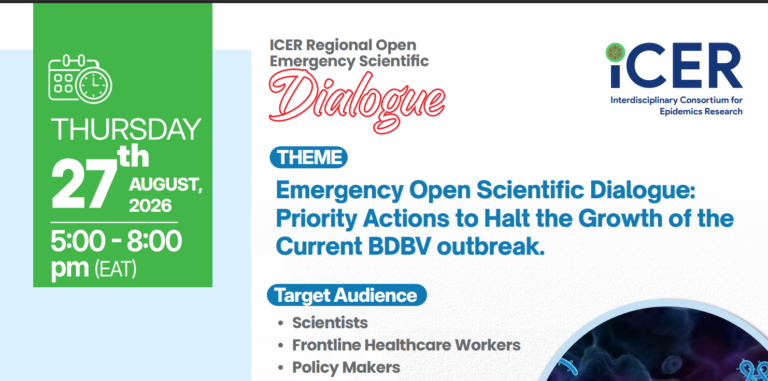
The recent ICER scientific webinar on Hantavirus brought together leading Ugandan scientists and clinicians to discuss the virology, clinical manifestations, prevention strategies and public health implications of hantavirus infections. The webinar highlighted the increasing global importance of rodent-borne zoonotic diseases and the urgent need for Uganda and Africa to strengthen epidemic preparedness systems, surveillance infrastructure, laboratory capacity, critical care readiness and One Health coordination.
The webinar emphasized that although no confirmed major outbreaks have been reported in Uganda, the country remains ecologically vulnerable owing to widespread human-rodent interactions, porous borders, increasing urbanization, changing land-use systems, food insecurity and weak zoonotic surveillance systems.
The webinar presentations explained that “Old World” hantaviruses found in Europe and Asia primarily cause Hemorrhagic Fever with Renal Syndrome (HFRS), while “New World” hantaviruses in the Americas cause Hantavirus Cardiopulmonary Syndrome (HCPS/HPS), characterized by severe respiratory failure and cardiogenic shock.
Importantly, the presenters emphasized that there is currently no specific antiviral treatment or globally approved vaccine for hantavirus infection. Therefore, clinical management relies heavily on early recognition, supportive care, oxygen therapy, intensive care management and mechanical ventilation.
The webinar discussions revealed substantial public and professional concerns regarding Uganda’s readiness to detect and manage rodent-borne epidemics.
The call to action included:
Strengthening one health surveillance systems
Expanding laboratory and diagnostic capacity
Enhancing ICU and emergency preparedness
Improving risk communication and community awareness